I still remember scouring libraries and bookshops all over Hyderabad until I finally tracked them down in a library at Lakdi-ka-Pul.
That was in the late seventies and early eighties.
Fast forward to 2026, and I found myself wondering when—and where—I had lost that crazy reader in me. Was it in 2020 when I officially transformed into a couch potato, happily binge-watching movies and serials on every OTT platform imaginable, irrespective of genre or language? Or was it when the unread books on my shelves and my ever-expanding “To Be Read” list began growing like Hanuman’s tail, becoming so overwhelming that I stopped reaching for them altogether? Or did my newfound passion for crochet quietly occupy every waking hour?
The jury is still out on exactly where I lost my reading mojo.
Last month, we visited the UK. We had packed our itinerary to the brim. I left my laptop behind, and I could not smuggle my yarn and crochet hooks past the sharp eyes of my husband.
My son and daughter-in-law have an impressive collection of books. They suggested I read The Art of a Lie, which had recently been their book club’s pick. They had both enjoyed it immensely.
As I picked it up, I did not then realize that the book and the subsequent ones would reunite me with a part of myself I had quietly assumed was gone.
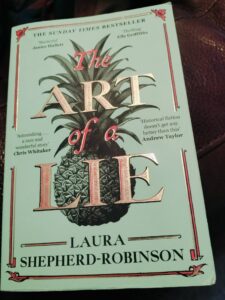
With the book in hand, I was immediately transported to London in 1749 and into the world of Hannah Cole. I followed her as she struggled to rebuild her life after the death of her husband and fought to keep her confectionery shop, The Punch Bowl and Pineapple, afloat. As the story unfolds, we learn about her marriage and discover that her late husband was far from the ideal partner she had hoped for. True to the spirit of the times, Hannah refuses to be defeated by adversity and eventually introduces ice cream to the people of London.
Laura Shepherd-Robinson’s The Art of a Lie has everything one could ask for in a historical novel—drama, intrigue, suspense, romance, and adventure. Despite an itinerary packed with sightseeing and long hours of travel across the UK, I finished the book in just three days. The twists were so unexpected that I never saw them coming.
What fascinated me even more was the way the author blended history with fiction. She retained the names of real eighteenth-century London businesses, including Fortnum & Mason, and even introduced Branson, an actual tea dealer whose name she discovered while researching in the British Museum. Henry Fielding, the celebrated author of Tom Jones, also appears as the astute magistrate investigating the murder of Hannah’s husband. The seamless weaving together of real people and fictional characters constantly made me wonder where history ended and imagination began.
In her author’s note, Shepherd-Robinson explains that she wanted to tell the stories of young widows and single women who struggled to keep small businesses alive in eighteenth-century London—women whose resilience rarely found a place in history. That thought lingered long after I had finished the novel.
So did one unforgettable line. Hannah says to William Devereaux, “I wish you had known her… the woman she might have been without the knocks.” When William echoes those words later in the novel, they carry even greater emotional weight. They left me wondering whether we are all, in some way, prisoners of our past, and the resultant choices we make.
The second book I devoured was My Name Is Asher Lev by Chaim Potok.
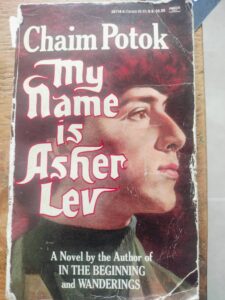
It follows the first twenty-two years of Asher Lev’s life, tracing the awakening of an extraordinary artistic talent within a deeply traditional Jewish family. Art becomes Asher’s refuge when his mother is overwhelmed by depression and his father is consumed by his work for the Rebbe. Yet the very gift that gives Asher purpose also drives a painful wedge between him and the people he loves.
The novel reaches its emotional peak when Asher paints his masterpiece, using the imagery of the Crucifixion to express his mother’s anguish. This is something his community would find it difficult to forgive. The final scene, with Asher leaving home while his parents watch silently from the window, is one that stayed with me long after I closed the book.
What moved me most were the well-etched characters. My heart ached not only for Asher, but also for his parents, especially his father, who worked for a cause that was in direct conflict with his son’s interests and passion. It is a deeply humane novel about the cost of remaining true to oneself.
Despite days filled with long walks, train journeys, and discovering the charming towns and villages of Britain, I found myself stealing every spare moment to read.
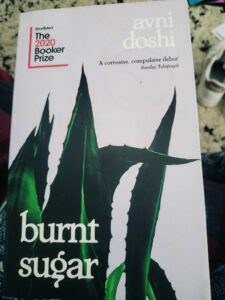
“I would be lying if I say my mother’s misery has never given me pleasure,” says Antara, Tara’s adult daughter, early on in the book Burnt Sugar. She goes on to add, “I suffered at her hands as a child, and any pain she subsequently endured appeared to me to be a kind of redemption — a rebalancing of the universe, where the rational order of cause and effect aligned. But now, I can’t even the tally between us. The reason is simple — my mother is forgetting, and there is nothing I can do about it. There is no way to make her remember the things she has done in the past, no way to baste her in guilt.”
The opening chapters lay the foundation for a deeply moving novel. It is a raw and unsettling exploration of the relationship between a mother and daughter. Through Antara’s memories, we witness a childhood shaped by her mother, Tara, who abandons her marital family in pursuit of life at an ashram. She takes Antara with her. Now, as Tara’s memory begins to fail, the roles are reversed. Antara finds herself duty-bound to care for the very mother whose neglect continues to haunt her.
It is not an easy book to read, but it is one that lingers long after the final page. Much of its power lies in the author’s writing. As the narrative moves between Antara and Tara, you find yourself constantly shifting your sympathies, your emotions as conflicted and exposed as those of the two women themselves. The final chapters, when Antara begins feeding her mother chocolates, are among the most poignant I have read. They have to be experienced rather than explained. Without revealing more, that quiet act spoke volumes. Not an easy book to forget.
The other two books that I completed during the month were:
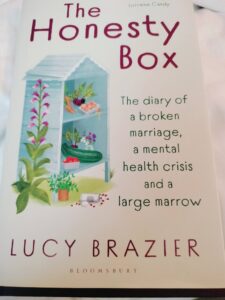
and the:
One of the things I love about the UK is the concept of honesty boxes. I have often seen small stalls outside farms stocked with surplus eggs, freshly baked bread, cakes, and homemade preserves. You simply pick up what you need and leave the money behind—many even have a QR code these days. I have also come across old red telephone boxes lovingly converted into miniature libraries, where you can borrow a book and leave another in its place. It is such a simple idea, built entirely on trust.
That is what first drew me to The Honesty Box.
In this memoir, the author writes about moving to rural England and, in many ways, using the honesty box as a metaphor while trying to save her marriage to her neurodivergent husband. I admired her willingness to throw herself into making jams, tending a garden and building a new life, all while ensuring that her career did not take a back seat. More than anything, I appreciated the quiet resilience that runs through the book—not just of the person navigating a neurodivergent condition, but also of the partner who walks beside them, offering support while wrestling with their own fears and disappointments.
What I liked most was that the memoir resists the temptation of a fairy-tale ending. Instead of pretending that everything is suddenly perfect, it offers something far more believable and comforting: two people choosing, every single day, to make their marriage work. Sometimes that simply means making time to have lunch together. It is a warm, honest, and deeply hopeful book.
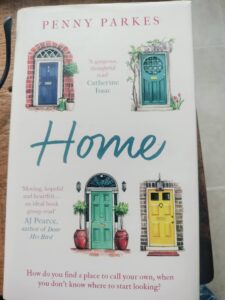
The last book I read during the month was Home, about a professional house-sitter who loves her unusual career and has built an enviable reputation. Unfortunately, I had to skim through it because I had already bought half a dozen books and simply couldn’t justify carrying another one home. So I’ll save that review for another day.
By the end of our fortnight in the UK, we had clocked over 350,000 steps, averaging between 10 and 15 kilometres every day. The long summer evenings, with daylight stretching until nearly ten o’clock, gifted me those extra precious hours to read.
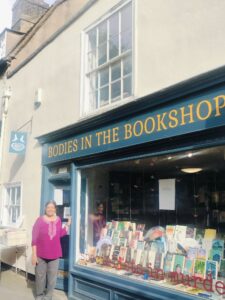
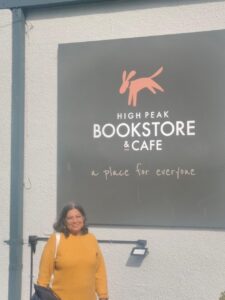
Somewhere between train journeys, village cafés, sprawling bookshops, and those irresistible book cafés, the reader in me returned.
In the week since I’ve been back home, I’m already on my second book.
P.S. British bookshops and book cafés deserve a chapter all to themselves.
This blog post is part of ‘Blogaberry Dazzle’
hosted by Cindy D’Silva and Noor Anand Chawla
in collaboration with Mister Tikku.
I haven’t read one in some time now. Have to get back to reading soon. You have a good list here.
Congratulations to you, Chandrika, on finding your mojo while travelling. I was a voracious reader and was known as a bookworm, but now even I have lost my habit of reading 🙁 I have tried to get back to it many times, but it is not happening. Your list sounds very interesting.
The list you shared has not a single book that I read, I will add them in my list now. I loved the way you wrote this blog with metaphors included like tbr compared with Hanuman’s tail and others.
Now, I want to read The Art of Lie. And some holidays do bring out our inherent passions. I love the idea of telephone box libraries.
Such a lovely tribute to the magic of books and the feeling of finding your way back to them. Beautifully expressed. Books truly do feel like old friends waiting to welcome us home.
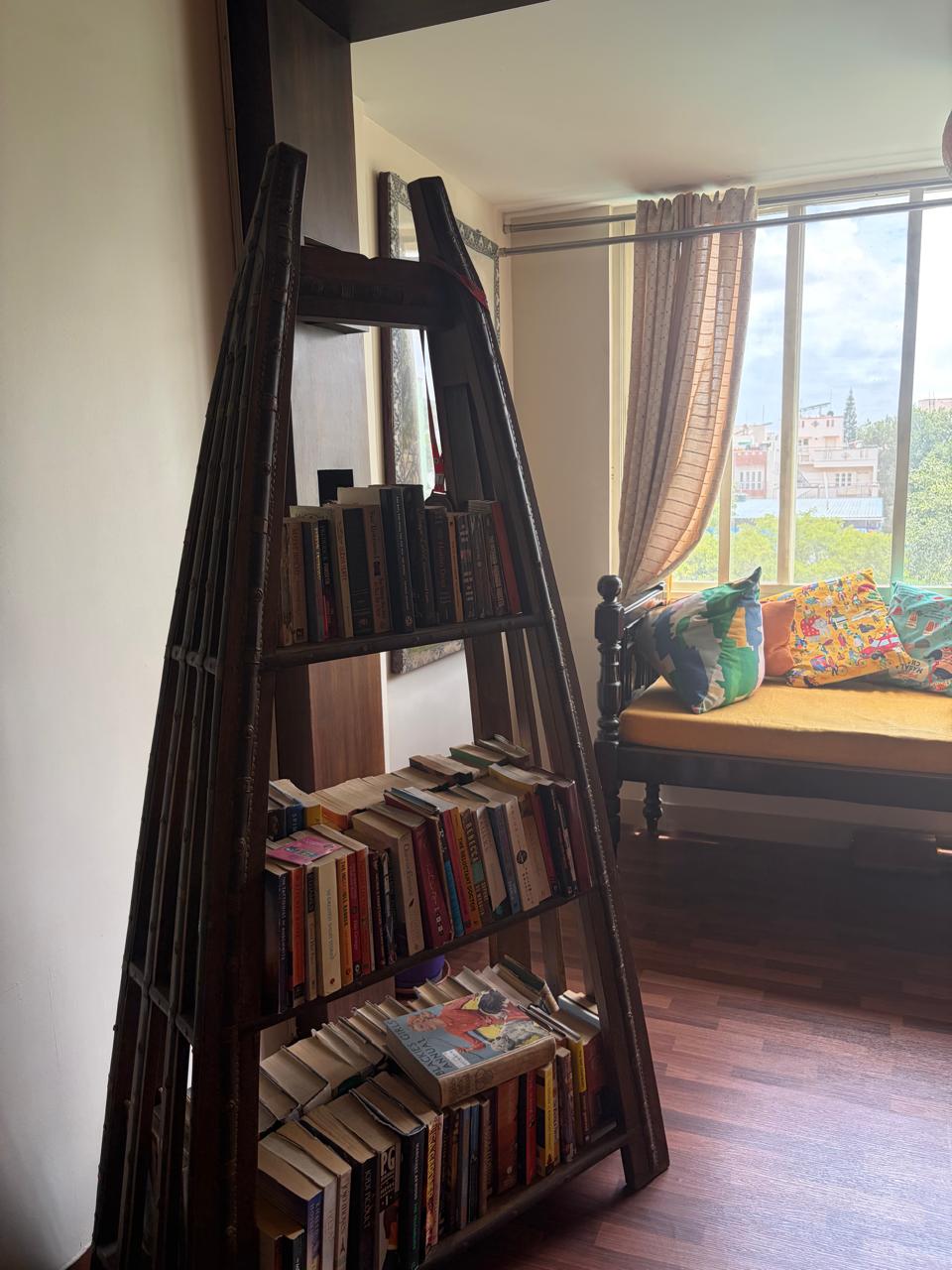
I’m still an avid reader. Man i absolutely love that shot of the bookshelf. The books you’ve read adding to my TBR
Wow! In one post, you have reviewed so many books—each review is neither too much nor too little, just enough to tempt. Lovely pics, glad you had a good trip and that the reading jinx was finally broken. A change of place is what you need—remember this for next time. 🙂
A TBR pile growing like Hanuman’s tail! And how lovely that it took leaving behind the laptop and the crochet hooks for the reader in you to resurface. Love these interesting picks; would love to visit the UK someday, super soon.
I am a bookworm and love reading both English and Bengali literature but I have to agree I cant read as much as I used to be earlier and that because of too much of work pressure. But I try to take out sometime bi-weekly atleast to be in touch with my reading habit. You shared a wonderful bunch of books which is worth a try for me.
I am beyond impressed with you being only 3 books short, which then you went on to read– you may be the only person i know off who has read the entire series!! bow to you 🙂
I am sorry your crochet smuggling plans were a flop – hide better next time 🙂
I am so happy reading about you re-discovering and re-igniting your love for reading! I have added some of these books to my own list to check out as I too keep falling off the reading wagon, and am always looking for books to pull me back in 🙂
Thanks so much for a lovely post and great additions to my evergrowing TBR! I recently read There are Risvers in the Sky – has evocative descriptions of London from 1850s and 2014. I also went to London end June and explored book shops on Portobello road – the pull of course was the “Notting Hill” bookshop – there was no Hugh Grant there but was still lovely to go in there! I also reached Paddington station at 4.50 – Let me know if you got the reference! Anyway my London trip could be an entire blog!
I love reading and all thanks to mom, I don’t remember a day in my life, that I have not read at least a page a day. I qould love to know your thoughts on the book Home. It’s intriguing and the cover is so eye-catchy!
You have a good reading list
Adding The Art of a Lie straight to my list. Telephone box libraries sound absolutely charming and clever. So glad your reading mojo returned in England. Burnt Sugar sounds emotionally heavy but unforgettable.
Getting back to an old hobby is like meeting an old version of yourself all over again. I love reading and of late am devouring cozy murder mysteries set in the 19th century London and thereabouts. You truly made good use of your time in UK. Will check out The Art of Lie.
Sometimes we don’t even realize when we drift away from the things we love. Glad you found your way back to reading again.
Beautiful blog post! I’m adding some of these books to my wishlist.
Sounds like the best possible holiday. You got to be with family, do everything one does as a tourist, and READ and write reviews the books. Thanks for the intro to so many new books and writers. This is a dream piece for every would-be writer looking for time to write. Encouraging by example.