
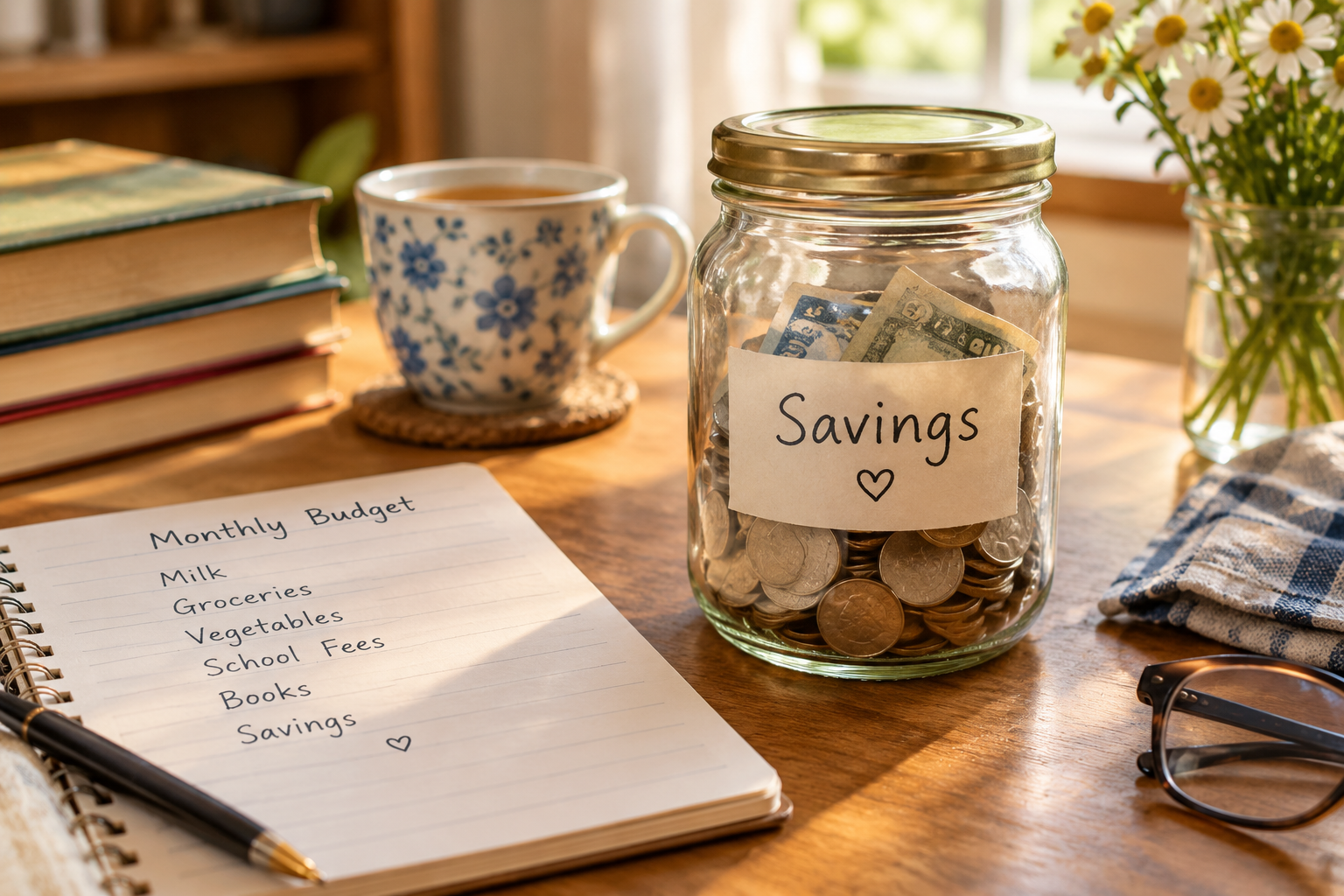
I remember my childhood, when my parents maintained a book for expenses. At the beginning of every month, they budgeted for milk, groceries, vegetables, school fees, and books, and set aside a small amount for savings.
Most months, an unexpected guest would arrive, or there would be an unforeseen medical expense, and my parents would have to dip into it.
Bringing up three girls wasn’t easy on one income. Yet, I grew up watching my parents save. More importantly, I watched them treat saving as a habit.
I never heard my father say, “I’ll save when I earn more,” or “I’ll start saving when I get my DA arrears.” There was always a little something to be put away, however small the amount.
We learnt, by precept, that saving was a part of life and living and still had an occasional eating out or an outing.
When I got married and entered my new home, there were many changes in my marital home, but one thing remained constant—the book for expenses.
My husband’s salary was more than my father’s, but so were the needs. My earnings added to his, yet we didn’t have too much to spare. School fees were more than double from the time we studied, as was the rent we had to pay. Grocery bills were higher, as were the expenses that came with growing children.
And we saved.
We saved through recurring deposits so that we could pay the school fees at the beginning of the academic year. We watched our expenses wherever we could, so that we could holiday more than our parents ever could. And whenever possible, we treated our parents too.
But I can almost hear the groan and the frequent lament: “Things are so different these days. It isn’t at all like when you guys were growing up.”
True. No argument there.
We live in a world where advertisements and hoardings constantly tell us to buy more. Online shopping has made buying almost effortless. Glitzy malls and supermarkets tempt us to take home things we didn’t know we needed until we saw them.
Our wardrobes groan under the weight of our purchases, while our busy lifestyles leave us with less and less time to look for cheaper options.
It is little wonder that saving can sometimes seem like a chore rather than a necessity.
But perhaps saving doesn’t have to be about doing without.
Building a healthy relationship with savings.
Saving is not what we do when we have money to spare.
Saving is not a sign of frugality.
Saving is not about depriving ourselves of the things we enjoy.
It is about making our money last longer so that we can enjoy our lives better.
And saving doesn’t necessarily mean putting away large amounts. It can start small. What seems insignificant today can add up to a sizeable amount over time.
Take online grocery shopping, for instance. If we shop every day, a little planning could help us avoid paying delivery charges repeatedly. The amount may seem small, but small amounts have a habit of adding up without our realising it.
The same applies to bank and ATM charges. When you withdraw money or use your cards, take a little time to read your bank statements. You may occasionally find charges or debits that you hadn’t noticed. Knowing where your money is going is the first step towards deciding where it should go.
If your company provides food coupons, don’t let them sit unused until they expire. Spend a little time finding out where they can be used.
And then there are those sudden spikes in expenditure.
We all have them. A festival, a family function, a school expense, a repair—or simply something we suddenly decide we must have.
Before making the purchase, ask yourself: Does it have to be this month?
Sometimes postponing a purchase by a month can make all the difference. Not every want needs to become an immediate purchase.
Credit cards are another area where a little discipline can save us a lot of money.
Pay the bill in full rather than paying only the minimum amount whenever possible. The interest on the unpaid balance is an unnecessary expense and can eat into whatever you might otherwise have saved. Allowing that balance to grow can also push us deeper into a debt trap.
But saving does not mean doing without.
Skipping lunch or dinner so that you can splurge on something else isn’t saving. Nor is denying yourself every little pleasure and then feeling miserable about it.
It is about moderation.
It is about looking at what we spend and asking ourselves whether it is something we need, something we want, or simply something we were persuaded to want.
My parents didn’t have financial apps or spreadsheets to track their money. They had a book, a pen, and a habit.
They didn’t wait for a bigger salary before saving. They didn’t wait for an unexpected windfall. They saved what they could and managed the rest.
I suppose that was the lesson I absorbed without even realising it.
Saving isn’t about waiting until we have enough money. It is about learning to make the money we have last enough.
And perhaps that is why saving, for me, has never really meant going without.
It has meant being able to afford the things that mattered.
Author’s Note:
But then I am taking the easy and neat way of saving. For the unlucky few, savings is a way out and even then, not enough. Do read this story against the backdrop of demonetization.
This post is a part of #Bachat&BeyondBlogHop series hosted by Manali Desai and Sukaina Majeed under #EveryConversationMatters Blog Hop Series, powered by authors Suruchi Hirawat and Harsh Soni.
Image credit: chat gpt
This blog post is part of ‘Blogaberry Dazzle’ hosted by Cindy D’Silva and Noor Anand Chawla in collaboration with Ratna Prabha.
Wonderful reflection on Saving is not about how much we earn, but how wisely we manage what we have. Saving is a habit rooted in discipline, not deprivation – nice thought.
The quintessential first rule of financial awareness – save first layered effectively in the post. Making your money work more without waiting for more money. Excellent.
“Saving isn’t about waiting until we have enough money. It is about learning to make the money we have last enough.” Is my learning from this post. You have beautifully portrayed savings are not a problem if we actually know how to save.
Absolutely! Our conditioned genetics were such that if we came across a rare windfall such as 100 bucks from a generous uncle for our bday, it would go straight into the piggy bank. Sometimes, I’ve not even seen the note in full. My mother would pull it from my hand as soon as the uncle left and into the piggy! Saving is a underrated habit.
Indeed, if we can be mindful of saving even small amounts, we really don’t need apps and spreadsheets. We can save enough to spend on a rainy day or meet medical emergencies if we notice our spending patterns and change accordingly.
Same here. Raising Three daughters was not easy. And I can recall how my mother saved whatever she could from the monthly expenses to make sure her daughters never had to compromise. Saving is a habit that we have inherited. I could relate on savings with gift cards and coupons and ATMs. It is not that difficult but just being a bit attentive towards these small areas.
“Saving isn’t about waiting until we have enough money. It is about learning to make the money we have last enough.” That is such a profound and true statement. Chandrika, your article is filled with practical good sense obviously picked up from your mother who used a pen, a notebook and a habit. I enjoyed going through it.
Such profound advice coming from experience and wisdom. I believe I am a careful spender. I keep things in cart for good number of days and then revisit it, sometimes half of the items strike out since they are no longer necessary so yes “Does it have to be this month” is a valid question we should ask before purchasing.
It’s imperative to always keep some amount of your income as savings. Liked your post.
Loved this perspective. Saving money doesn’t have to mean compromising on life’s little joys. It’s all about making thoughtful choices, finding balance and spending on what truly matters. A wonderful reminder that frugality and happiness can go hand in hand
I have to agree. The expenses book really helps and in this era that 10 second thought before actually buying online helps in savings. Savings definitely shouldnt stop
Very true. Inculcating the habit of saving is very important. When I started earning, I was also taught to save at least some portion of what I earned. And slowly, the same applied to investing. Put away a little something in MFs each month and forget about them.